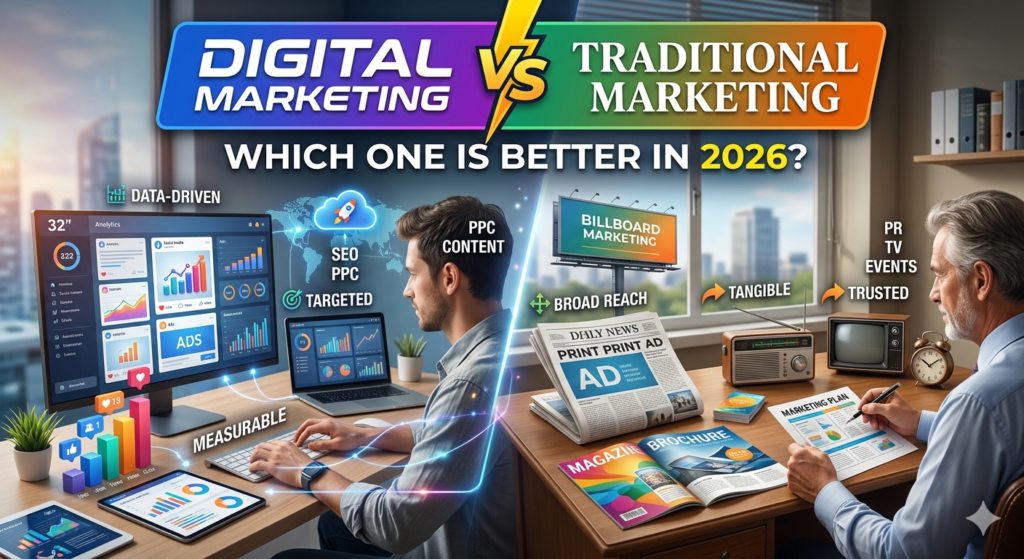
In today’s fast-changing business world, marketing plays a crucial role in business growth. Whether you are a small business owner, freelancer, or entrepreneur, understanding the difference between digital marketing vs traditional marketing can help you make better decisions and get more customers.
Let’s break it down in a simple way.
📌 What is Traditional Marketing?
Traditional marketing refers to the conventional methods of promoting products and services. These include:
- TV advertisements
- Newspaper ads
- Radio commercials
- Hoardings & billboards
- Pamphlets and flyers
These methods have been used for decades and are still effective for reaching mass audiences.
📌 What is Digital Marketing?
Digital marketing uses online platforms and the internet to promote products and services. It includes:
- Social media marketing (Instagram, Facebook)
- Search engine marketing (Google Ads)
- Content marketing (blogs, YouTube)
- Email marketing
- Influencer marketing
Today, digital marketing is growing rapidly because most people spend a large amount of time online.
🖼️ Image 1: Traditional vs Digital Marketing Overview
🔍 Key Differences Between Digital and Traditional Marketing
1. Reach and Audience Targeting
Traditional marketing reaches a broad audience, but it is not specific. For example, a newspaper ad is seen by many people, but not all are your potential customers.
Digital marketing allows you to target specific audiences based on age, location, interests, and behavior. This makes your marketing more effective.
👉 Example: You can show ads only to people interested in fitness or business.
2. Cost Effectiveness
Traditional marketing is expensive. TV ads, newspaper ads, and hoardings require a big budget.
Digital marketing is budget-friendly. Even with ₹500–₹1000, you can start running ads and get leads.
👉 This makes digital marketing perfect for startups and small businesses.
3. Measurability and Results
In traditional marketing, it is difficult to track results. You don’t know how many people actually saw your ad or took action.
In digital marketing, everything is measurable:
- Clicks
- Views
- Conversions
- ROI (Return on Investment)
👉 You can clearly see what is working and what is not.
🖼️ Image 2: Digital Marketing Analytics Dashboard
4. Engagement and Interaction
Traditional marketing is one-way communication. Customers cannot directly interact with your ad.
Digital marketing allows two-way communication:
- Comments
- Likes
- Messages
- Reviews
👉 This helps in building strong relationships with customers.
5. Speed and Flexibility
Traditional campaigns take time to plan and execute. Once published, changes are difficult.
Digital marketing is fast and flexible:
- Ads can go live instantly
- You can edit or stop campaigns anytime
👉 This gives you full control over your marketing.
6. Trust and Credibility
Traditional marketing is often considered more trustworthy because it appears in established platforms like newspapers and TV.
Digital marketing builds trust through:
- Reviews
- Testimonials
- Social proof
👉 Both have their own importance depending on the audience.
🖼️ Image 3: Social Media Engagement Example
⚖️ Which One Should You Choose?
The answer is: It depends on your business goals.
Choose Traditional Marketing if:
- You want mass awareness
- You target local offline audience
- You have a high budget
Choose Digital Marketing if:
- You want targeted leads
- You have a limited budget
- You want measurable results
- You want to grow online
🚀 Final Conclusion
In 2026, digital marketing is clearly dominating due to its affordability, targeting, and measurable results. However, traditional marketing still holds value, especially for large brands and rural markets.
👉 The best strategy is to combine both.
For example:
- Use hoardings for brand awareness
- Use digital ads for lead generation
This hybrid approach gives you maximum results.
💡 Pro Tip (As a Digital Marketing Expert)
If you are just starting your journey, focus on:
- Instagram Reels
- YouTube Shorts
- Basic Facebook Ads
These platforms can help you generate leads and income even with a small budget. To know more about this contact our team